Process · 14 July 2026
A good answer starts with the job rather than a generic rule. How the required hire period is managed when scaffolding remains in place for days, weeks or a longer programme. Two buildings that look similar from the road can need very different access once the working height, number of elevations, carrying route and trade requirements are considered. That is why a useful scaffolding conversation normally begins with the work being carried out, where it is happening and how the site can be reached. Scaffolding is most effective when it is treated as part of the project rather than a separate structure that simply appears around a building. In this case, the aim is to keep access available for as long as the project genuinely needs it while coordinating inspections, changes and eventual dismantling. The practical details matter: where operatives need to stand, how materials move, what doors or routes remain in use and whether the programme is likely to change once the main work starts.
There is no useful one-size-fits-all hire period
The first point to understand is that the scaffold should be built around the task, not around a stock picture of a house. For how the required hire period is managed when scaffolding remains in place for days, weeks or a longer programme, the important question is what access the trade actually needs. A contractor working on roof replacement may need a different platform position from somebody carrying out external refurbishment. Even when the building footprint is identical, the working arrangement can change because the people using the scaffold need to reach different details and handle different materials.
This is also why a quotation based only on the phrase ‘scaffolding for a house’ can be misleading. A useful scope identifies the elevations, working heights and features that affect erection. Details such as programmes running over, different trades using the scaffold in sequence or site conditions changing can change the route used to carry components and the way the scaffold is arranged. None of these necessarily makes the job difficult, but they do need to be visible before the team turns up.
The best result is usually the simplest arrangement that gives the required access without adding unnecessary structure. That means planning the expected hire period, who will use the scaffold and planned alterations together. If one of those points is unknown, photographs or a short site discussion can usually clarify it before the work begins.
Agree the expected programme at quotation stage
Site access often has as much influence on a scaffold job as the building itself. A clear driveway beside a detached property creates a very different working environment from a rear elevation reached through a narrow passage. When components have to be carried further, moved around parked vehicles or brought through a restricted route, the erection sequence needs to account for that from the start.
Common constraints include programmes running over, clients assuming dismantling dates are flexible without notice and work pausing for materials or weather. The point is not to make the job sound complicated; it is to avoid treating those details as surprises. If the scaffold team knows what is there, they can plan where the vehicle can stop, where materials can be set down and how the working area should be kept clear while erection is taking place.
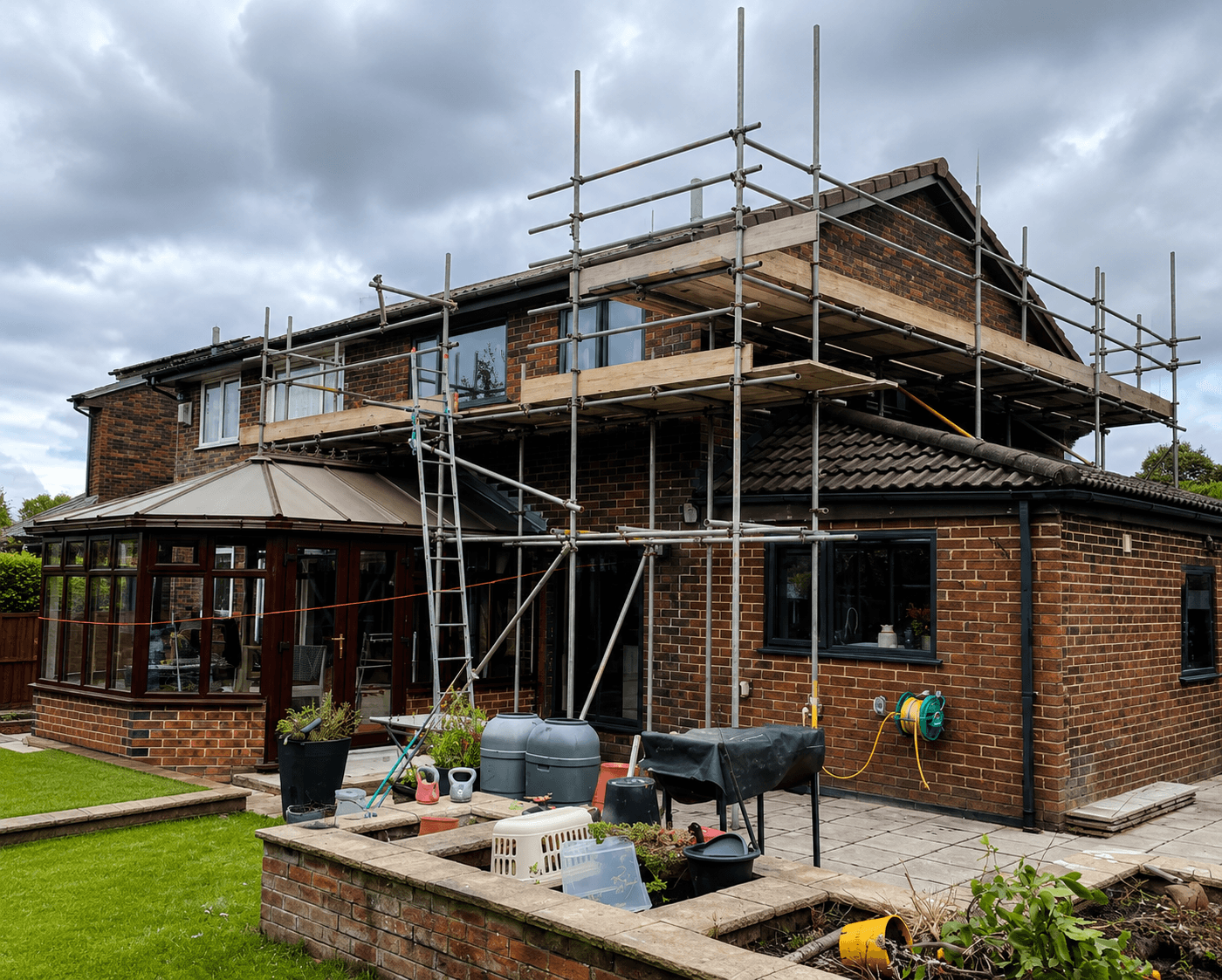
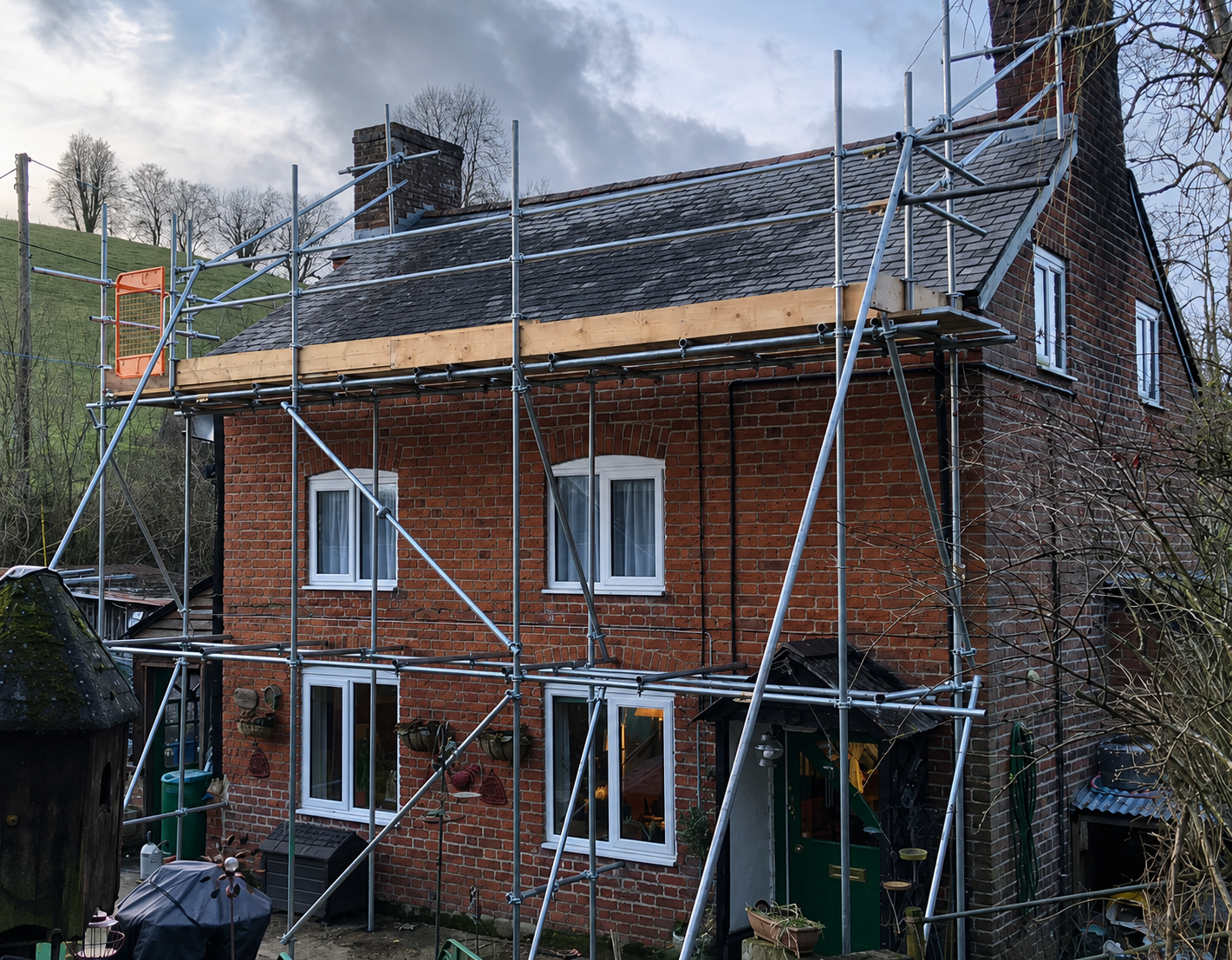
Clients can help by sending wide photographs from ground level and, where relevant, a picture of the route from the road to the work area. A photo of the defect alone rarely shows enough. The wider image explains the building, the ground and the obstacles in one view, which is usually far more useful when deciding how the scaffold should be approached.
- Check programmes running over.
- Check different trades using the scaffold in sequence.
- Check site conditions changing.
- Check clients assuming dismantling dates are flexible without notice.
What happens when the work runs over
The people using the scaffold are a key part of the planning. Scaffolding for roof replacement is not automatically the same as scaffolding for multi-trade maintenance. The trade may need a continuous platform, access at more than one height, room to move materials, or a clear section around a particular feature. Understanding that requirement early prevents the scaffold becoming technically present but practically awkward to use.
It is worth asking the contractor doing the main work whether they have a preferred working height, which elevations they need and whether any part of the job will be completed in stages. This is particularly helpful where commercial programmes or projects affected by weather or material delays is involved. A short conversation between the client, trade and scaffolder can often remove assumptions that would otherwise only become obvious after erection.
Good access also makes the wider programme easier to manage. When the scaffold supports the order in which the trade intends to work, there is less pressure to request avoidable alterations later. If the project genuinely changes, alterations can be discussed, but starting with a clear scope keeps those changes deliberate rather than reactive.
For this type of project, for homeowners, the main preparation is usually simple: keep the agreed work area reasonably clear, move vehicles if requested, make sure gates can be opened and tell the team about anything they cannot see from the road. For contractors, the same principle extends to coordinating deliveries, operatives and other trades so several activities are not competing for the same narrow area at the same time.
Longer projects and ongoing site management
On erection day, the working area needs to be treated as an active site. The exact sequence varies, but the team will normally establish the material area, work through the planned elevations and build the scaffold progressively. Clients do not need to manage the erection, but making sure agreed access is available helps the crew work without unnecessary stops.
This is where planned alterations, changes to the completion date and when dismantling can realistically be booked become practical rather than theoretical. A doorway that must remain in use, for example, should be identified before the team has already worked across that part of the elevation. Likewise, if another contractor needs vehicle access or a delivery is booked for the same period, sharing that information in advance makes coordination much easier.
Once the scaffold is in place, the trade should use it for the purpose it was arranged for and communicate if the work changes materially. The scaffold should not be casually altered by other people on site. If an adjustment is required because the project has moved to a different area or stage, the scaffolding contractor should be involved so the access can be reviewed properly.
For this type of project, if there is doubt about scope, ask before erection rather than after it. Questions about the expected hire period, who will use the scaffold or changes to the completion date can usually be resolved quickly when the property and the proposed work are reviewed together. Small decisions made early often save much larger interruptions once the main trade is ready to begin.
Different trades using the same scaffold
Clear information at quotation stage is one of the easiest ways to keep a scaffolding job straightforward. The most useful starting points are the expected hire period, who will use the scaffold, planned alterations, changes to the completion date and when dismantling can realistically be booked. That sounds like a lot, but in practice it can often be covered by a postcode, several wide photographs and a short explanation of the work.
It also helps to distinguish between what is confirmed and what is still likely to change. If the main contractor has not decided whether external refurbishment will be included, say so. The scaffolder can then explain whether that change would affect the access arrangement. Hiding uncertainty does not make a quote more accurate; identifying it lets everyone understand which parts of the scope are fixed and which may need updating.
For domestic work, a simple written summary is usually enough: what is being done, which sides of the property are involved, when the trade hopes to start and anything unusual about access. For larger work, the same principles apply but the information may include drawings, a site contact, programme dates and coordination with several contractors.
For this type of project, the quotation should make sense in relation to the access requested. Price matters, but it is also worth checking that the elevations, purpose and expected period are understood consistently. Two prices are not directly comparable if one covers roof replacement and another silently assumes a smaller scope. Clear descriptions make comparisons more useful and reduce misunderstandings later.
- Confirm the expected hire period.
- Confirm who will use the scaffold.
- Confirm planned alterations.
- Confirm changes to the completion date.
Planning removal without rushing the final work
Projects do not always follow the first programme exactly. Weather, hidden defects, material lead times and changes in the trade’s scope can all move the finish date or create a need for access somewhere that was not originally included. The important point is to communicate the change before it becomes urgent.
If the project expands from roof replacement into external refurbishment, or an additional elevation becomes necessary, the scaffold arrangement may need to be reviewed. The same applies if different trades using the scaffold in sequence becomes blocked or site conditions change around the structure. A planned alteration is much easier to coordinate than an assumption that the existing scaffold will automatically suit a new task.
Clients should also keep the scaffolder informed when the expected hire period changes. Dismantling is normally scheduled around the project programme, so an early update gives everyone more flexibility. It is better to revise the date while work is still progressing than wait until a collection has already been arranged.
Keeping communication simple throughout the hire
The final stage is as important as the first. Once the trade has finished and the scaffold is no longer required, the client or site contact should confirm that the work is complete and that the access can be removed. This prevents one contractor assuming the scaffold is finished while another still expects to use it.
Before dismantling, tools, waste and trade materials should be cleared from the platforms and the agreed working area should be accessible. If part of the scaffold still needs to remain, that should be discussed rather than decided informally on the day. A clear instruction allows dismantling or partial changes to be planned in the same way as the original erection.
A well-managed scaffolding job therefore has a simple rhythm: define the work, plan the access, erect the scaffold, communicate any changes and arrange removal when the work is genuinely complete. The structure itself is only one part of the service. The coordination around it is what keeps the project practical from the first quotation through to collection.
Final word
The main lesson from how long can scaffolding stay up? is that good scaffolding starts with clear information and a realistic understanding of the work. The objective is to keep access available for as long as the project genuinely needs it while coordinating inspections, changes and eventual dismantling. That is easier when the scaffold company can see the whole site, understand the trade requirement and plan around the actual access available. For clients, the practical approach is simple: send useful photographs, describe the work accurately, flag restrictions early and keep the scaffolder updated if the programme changes. That produces a better quotation, a smoother erection and an access system that is more useful to the people doing the work.